
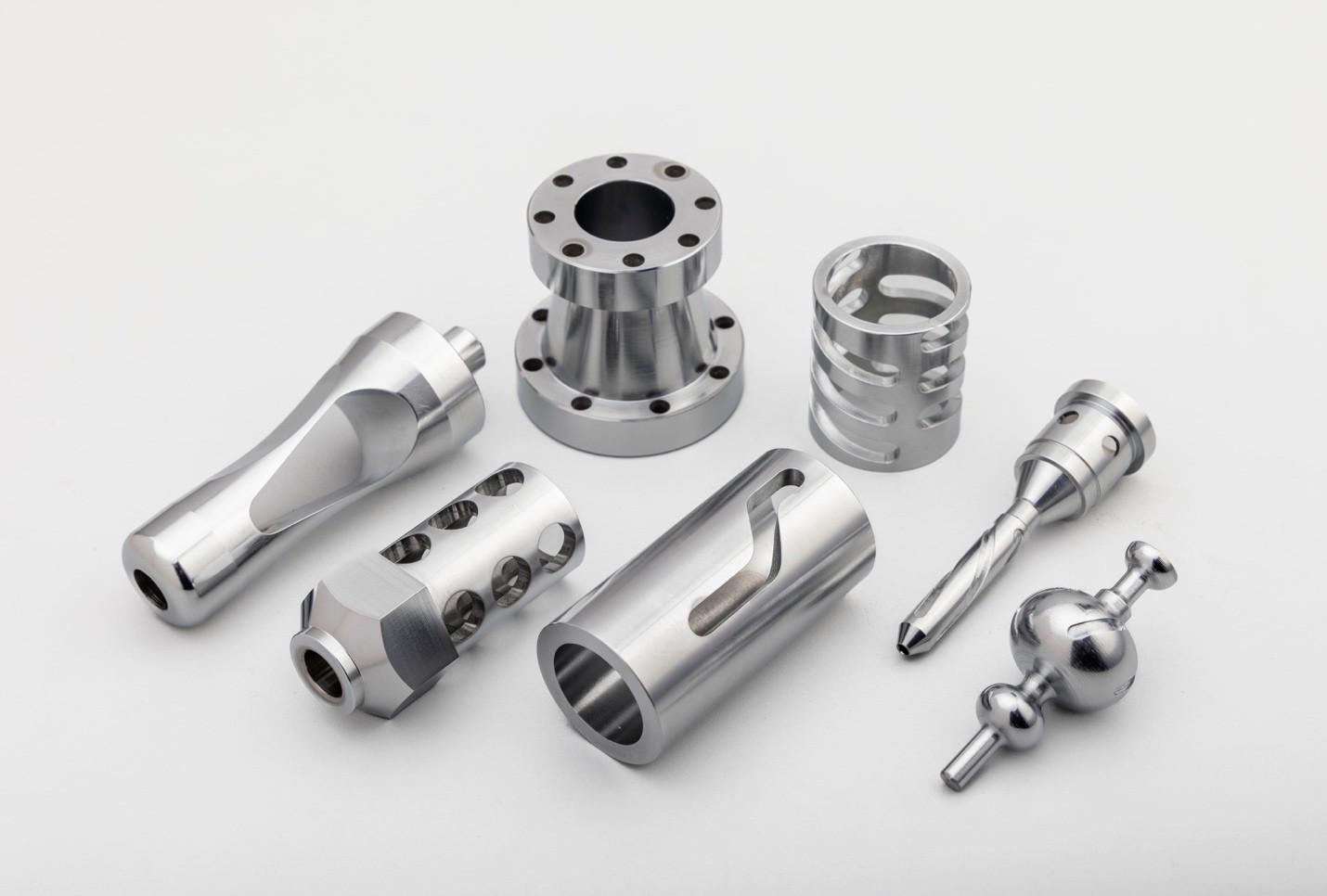
Oilfield components reach the machine as forgings, castings or bar that already carry the cost of melting, heat treatment and testing, so a scrapped part costs much more than spindle time. Batch sizes are often small, from one piece to a few dozen per drawing revision. CNC machining suits that profile because setups and proven programmes transfer from one job to the next without dedicated tooling. Each component class below fails in its own way when the machining is off, and the failure mode decides which feature the shop has to protect first.
Valve Bodies and Wellhead Housings: Alignment Across Large Cavities
A gate valve body is cut from a forging with a central cavity, two seat pockets and a stem bore, usually across several setups. When the seat pockets sit off the flow bore axis or off each other, the gate and seats load unevenly, operating torque rises and one seat wears faster than the other. The fault can show up at low-pressure testing, where a valve that holds at high pressure may still weep. Shops limit the risk by finishing the pockets and bore in one setup where the machine envelope allows, and by re-probing datums after every repositioning.
Tubing hangers and tubing head spools add port geometry to the problem. Control line ports and lock-down screw profiles must land at defined angular positions relative to the landing shoulder. A hanger that seats correctly but has a misoriented port cannot connect its line, and the error surfaces at stack-up in the test bay or on the rig floor. Indexed rotary tables or five-axis machines can hold those angles in a single clamping.
Drill Collars and Subs: Thread Roots Set Fatigue Life
Rotary shouldered connections on collars and subs see cyclic bending with every revolution through a dogleg. The last engaged thread carries the highest load, so fatigue cracks can start in the root of the pin or box and grow until the string twists off, leaving a fish to recover. Specifications control root radius, thread form and relief features such as the stress relief groove on the pin and the bore back on the box. Many collar threads are also cold worked after cutting to leave the root in compression. A CNC lathe cuts the profile consistently only while the insert holds its form, and a worn or chipped insert leaves a sharper or rougher root than the drawing allows. Gauging the thread form at set intervals can catch that drift while the batch is still small.
Cross-Bores Decide How Long a Fluid End Lasts
The fluid end of a triplex mud pump is a forged block with intersecting bores for suction, discharge, plunger and valve seats. Pressure cycles load the block with every stroke, and stress concentrates where the bores meet, so fatigue damage often begins at those intersections. Machining shapes the outcome through the blend radius at each intersection and the finish of the bore walls, which should be free of chatter marks and steps. Thorough deburring inside the cross-bores matters too, since they are awkward to reach. A cracked block is typically retired, and the pump stays down until a spare is fitted.
Choke Trim Wears Where the Ports Sit
Choke cages, sleeves and plugs handle high-velocity flow, often carrying sand, and erosion begins where the flow is most concentrated. Port position and edge condition set how the trim wears. Steel bodies and cage blanks are turned and drilled on CNC machines, while tungsten carbide trim is normally finished by grinding or EDM because carbide resists conventional cutting. Radial ports drilled off position, or left with burred edges, can produce uneven jets that wash out the heavily loaded side early, and the choke may lose its flow characteristic before the planned change-out.
Downhole Tool Housings: Thin Walls, Long Bores, Low Magnetism
Measurement-while-drilling (MWD) and logging-while-drilling (LWD) housings and non-magnetic collars are long tubes machined from austenitic stainless or similar low-permeability alloys, so magnetic direction sensors can read the Earth’s field without interference from the steel around them. The bore contains internal shoulders and flats where electronics stacks land, and a bore that runs off-centre leaves one side of the wall thinner than the other. Thin spots reduce collapse margin at depth, and an oval or tapered landing can stop the electronics from seating. Wall thickness mapping along the full length can find the fault while the part is still on the machine.
Other Parts That Run on CNC Machines
The same shops also cut parts with their own critical features:
- Blowout preventer (BOP) ram blocks and bonnets: large forgings with ram cavities and guide surfaces that must hold ram travel true.
- Packer mandrels and tubing accessories: thin-walled tubulars with slip, element and seal grooves cut to depth tolerances.
- Stabilisers: spiral blades milled to a gauge diameter that keeps the string centred in the hole.
- Instrument manifolds and fittings: bar-stock parts turned in volume, where ferrule seat angles and thread form decide leak tightness at the first pressure test.
What to Check Before Sending a Drawing
Capability gaps tend to surface after the quote is accepted, so these questions belong before it:
- Envelope: Can the lathe take the full length of the collar or sub, and does the shop have deep-bore equipment for housings?
- Thread inspection: Has the shop cut this thread form before, and can it show gauge records for it?
- Heat-treat sequence: Is the part machined before or after heat treatment, and how does the shop allow for forgings that move when material is removed?
- Marking: Where does the drawing require stamping or laser marks, and does the shop’s process keep them clear of sealing surfaces and thread roots?
Quotes are usually compared on hours and material, so a price that omits thread inspection or a deep-bore setup often reflects a smaller scope, not a smarter process. A drawing sent with its heat-treatment condition, test pressure and thread gauge requirements lets the shop plan its sequence and inspection around them. One sent with dimensions alone gets priced for a different part.
For enquiries, reach us as follows:
Email: sales@offshoresynergy.ae
Phone: +971 7 208 1300
Website: www.offshoresynergy.ae
