
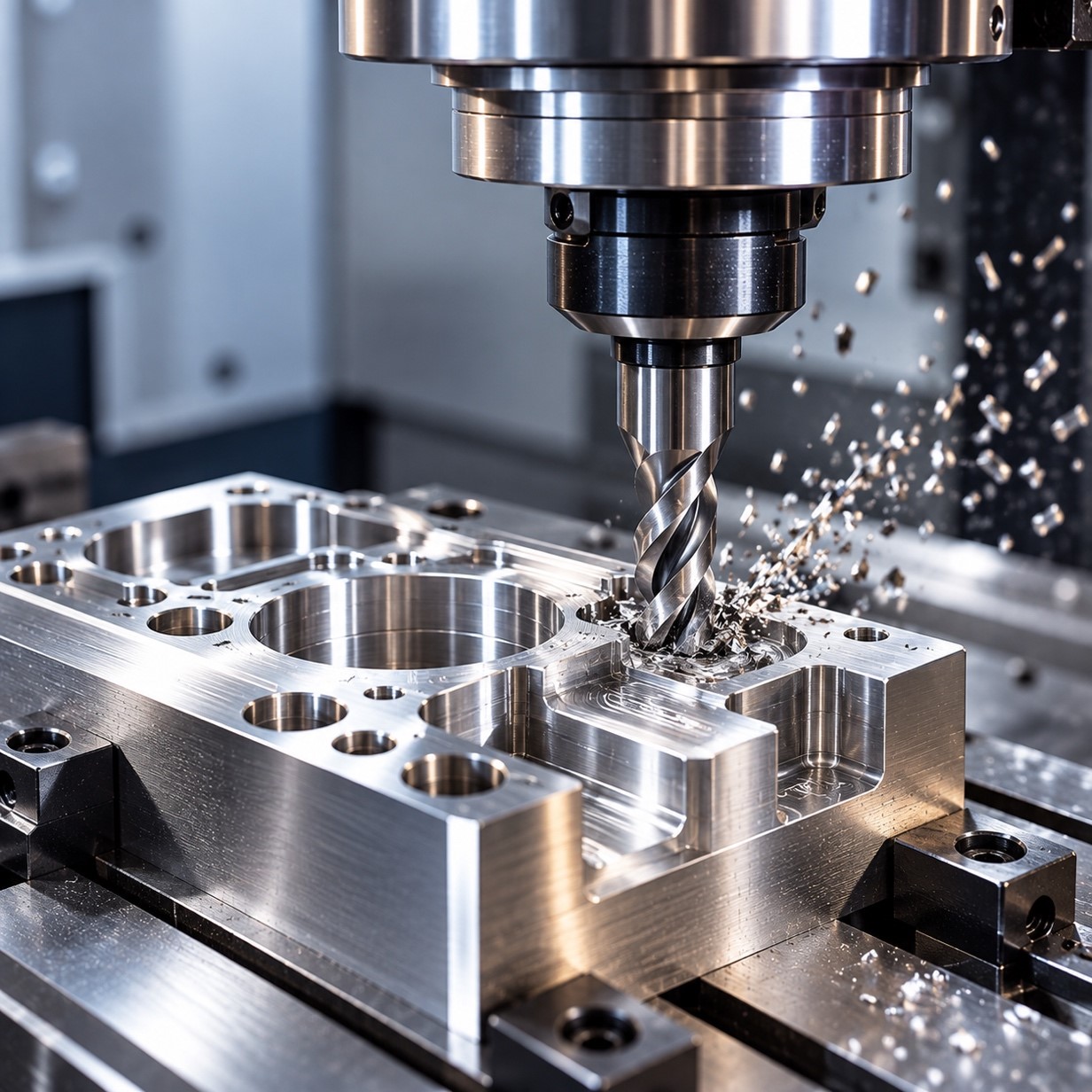
Downtime in a machining operation splits into two very different problems that get treated as one. Unplanned downtime such as a broken tool, a crash, an unexpected stoppage, costs a shop far more than planned downtime, a scheduled changeover or maintenance window, because unplanned stoppages arrive with no warning and no queued work to fall back on. CNC platforms reduce both, but through entirely different mechanisms: predictive tool and machine monitoring attacks the unplanned side, while automated tool changing, quick-change workholding, and unattended running attack the planned side. Treating downtime as one number to reduce misses which lever moves it.
A machine sitting idle for an hour due to a scheduled tool change costs a shop money. A machine sitting idle for four hours because that tool change did not happen in time, and instead a snapped insert took out a partially finished part along with the next three hours of queued work, costs considerably more. Both show up as downtime on a production report. Only one of them was avoidable through better information, and the difference between the two is where CNC’s real advantage over manual or semi-automated machining shows up.
Predictive Tool Monitoring Stops Failure Before It Happens
A cutting tool does not fail without warning in a well-instrumented CNC operation. Spindle load and torque sensors track how hard a tool is working in real time, and a tool approaching the end of its useful life draws measurably more power to remove the same amount of material as friction and edge wear increase. This trend is detectable well before the tool breaks.
The consequence of ignoring this signal is not just a broken tool. A tool that fails mid-cut, instead of being changed proactively, often takes the part with it, sometimes damaging the fixture or spindle in the process, and the resulting cleanup, requalification of the machine, and scrap replacement extends far beyond the few minutes a scheduled tool change would have taken. Shops that set tool change intervals against measured wear trends, not a fixed cycle count, convert an unpredictable failure into a predictable, scheduled event.
Automatic Tool Changers Remove Manual Handling From the Equation
A machining centre with an automatic tool changer swaps between tools in seconds, pulling from a magazine holding anywhere from a dozen to over a hundred pre-loaded tools depending on the machine. Manual tool changes on older or simpler equipment involve stopping the spindle, physically removing and inserting tooling, and re-establishing tool length offsets, a process that can take several minutes per change and multiplies across a complex part needing dozens of operations.
On a part requiring twenty tool changes, the difference between automatic and manual changeover compounds directly into cycle time, but the downtime impact goes further than raw speed. Manual tool handling introduces the chance of an incorrectly seated tool or a wrong offset entered under time pressure, and either mistake produces a scrapped part discovered only after the damage is done, adding unplanned downtime on top of the time already lost to the slower changeover itself.
Quick-Change Workholding Cuts the Time Between Jobs
Switching a machine from one job to the next traditionally means removing the old fixture, installing and aligning the new one, and re-establishing the part’s zero point relative to the machine, a process that can consume a significant fraction of a shift on a machine running frequent small batches. Zero-point clamping systems and standardised fixture plates change this by keeping the reference position fixed on the machine table itself, so swapping a fixture returns to the same location within a few microns without a full realignment procedure.
- Standardised fixture plates. A common base plate across multiple jobs lets different fixtures bolt into the same reference points, cutting alignment time to nearly zero between changeovers.
- Zero-point clamping modules. These allow a loaded fixture to be lifted off and a different one dropped on in seconds, with the machine’s coordinate system already correct.
- Pre-set tooling offline. Tools measured and set on a separate presetting station before they reach the machine mean the spindle is never stopped for offset measurement mid-job.
Shops running high-mix, low-volume work see the largest downtime reduction here, since changeover frequency is exactly what makes this category of downtime add up.
Unattended Running Extends Productive Hours Without Adding Labour
Bar feeders on turning centres and pallet changers on machining centres let a machine keep producing parts after an operator’s shift ends, loading new raw material or swapping a finished pallet for a fresh one without anyone present. This does not reduce downtime in the strict sense of fixing a stoppage. It removes an entire category of downtime that exists only because a machine was waiting for a person to load it, rather than because anything was broken or misaligned.
The practical effect on a production schedule is significant. A machine capable of running unattended overnight or through a lunch break effectively adds productive hours to the day without adding shift labour, and this genuinely changes throughput calculations for shops running capacity-constrained equipment, since the bottleneck machine’s available hours increase without any change to the machine itself.
Program Verification Catches Crashes Before They Happen
A programming error such as an incorrect tool length, a misjudged rapid move, or a fixture clearance issue, discovered on the shop floor during an actual cutting cycle produces the most expensive kind of unplanned downtime: a crash. A collision between tool and workpiece or fixture can damage the spindle, bend or break tooling, and take a machine out of production entirely while it is inspected and, if necessary, repaired or recalibrated.
Simulating a CNC programme against a virtual model of the machine, fixture, and stock material before it ever runs on the equipment catches the geometric conflicts that cause crashes, at the cost of a few minutes of computer time rather than hours or days of machine downtime and potential damage. Shops that skip this verification step on the assumption that an experienced programmer will catch errors by eye are trading a predictable, low-cost check for an unpredictable, high-cost failure.
Matching the Fix to the Type of Downtime Actually Occurring
Reducing downtime effectively starts with separating the unplanned failures, tool breakage, crashes, unexpected stoppages, from the planned pauses, changeovers, scheduled maintenance, tool swaps, since these two categories respond to completely different interventions. Predictive monitoring and programme verification prevent the unplanned failures from happening in the first place. Automated tool changing, quick-change workholding, and unattended running shrink the planned pauses that would otherwise happen anyway. A shop chasing a single downtime number without knowing which category is driving it usually ends up investing in the wrong fix for the problem it actually has.
For enquiries, reach us as follows:
Email: sales@offshoresynergy.ae
Phone: +971 7 208 1300
Website: www.offshoresynergy.ae
